



 By
By AirTM Review 2026: The Digital-Dollar Account
If you run traffic or push offers from Latin America — or anywhere with currency controls and a shaky local currency — the problem isn’t earning dollars, it’s keeping them. Local banks limit them, devaluation eats them, and cashing out to spendable local money is its own headache. AirTM is built for exactly that gap: a USDC-based “digital dollar” account with a US virtual account, a peer-to-peer marketplace to swap dollars for local currency, and a Visa card to spend from.
Most reviews aim this at freelancers on Upwork. This one looks at AirTM the way it fits a media buyer or affiliate in an emerging market — as a way to receive payouts, convert them, and move money — and it does not sugarcoat the part that matters most: AirTM has a real, well-documented reputation problem around account freezes.
Disclaimer: Independent, informational review — not financial, tax, or legal advice. AirTM is a custodial service (it holds your funds), and USDC balances are not FDIC/FSCS-insured. Its reputation is mixed and account-freeze complaints are common — read the risks section before you rely on it.
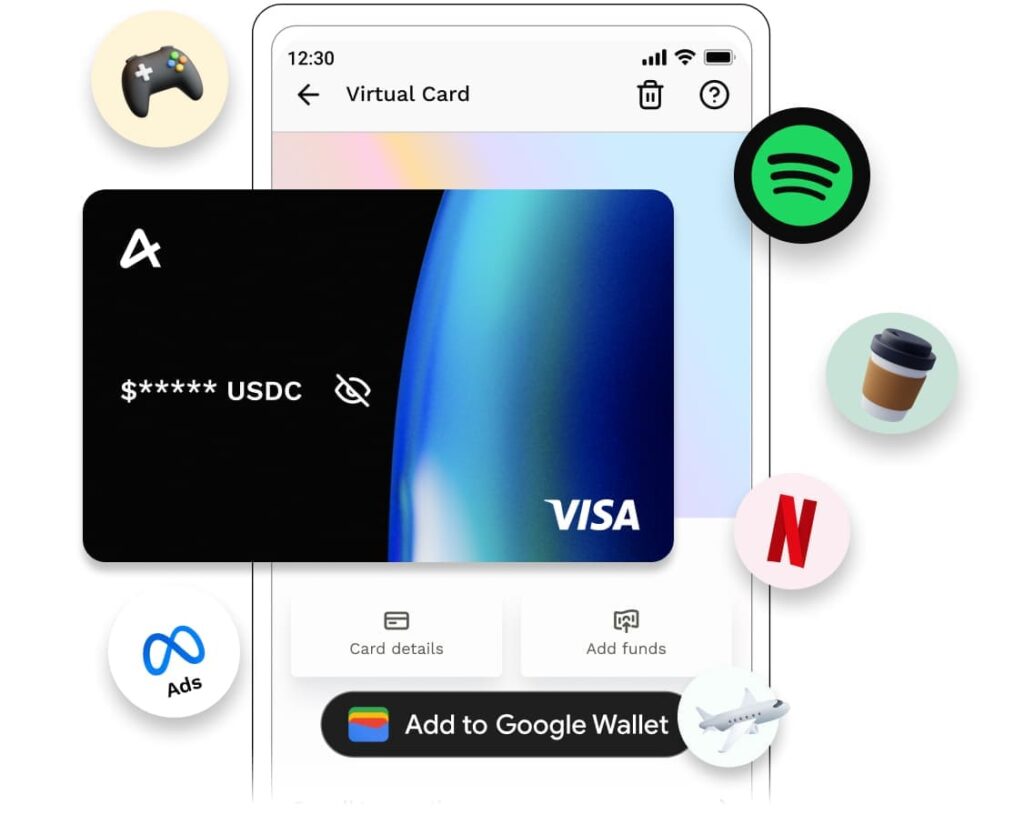
AirTM positions itself as a “digital dollar” account
Quick verdict
AirTM is a niche transit tool, not a home base for your money. If you operate in or from Latin America or a currency-restricted country, or a specific network pays you through AirTM, it solves a real problem: receive USD, hold it in dollars, swap to local currency P2P, or pull it out as crypto. But it’s custodial, its Trustpilot sits around 3.1/5 on thousands of reviews, and account freezes after verification are the single most common complaint. Use it to receive and cash out quickly — never to store a balance you can’t afford to have locked. For a cleaner digital-dollar experience, KAST is usually the better product; for pure fiat, Wise or Payoneer.
| What it is | USDC “digital dollar” wallet + P2P marketplace (custodial, not a bank) |
| Company | US-based, registered as an MSB with FinCEN |
| Reach | 190+ countries, 500+ local funding/withdrawal methods |
| Receiving | US virtual account (ACH), crypto (USDC/USDT/DAI), P2P, local methods |
| Card | Virtual Visa (issued by Lead Bank via Bridge, a Stripe company) |
| Newer features | Airtm Yield (earn on idle USDC), Airtm Business |
| The catch | Custodial + ~3.1/5 Trustpilot; freezes and P2P scams are real risks |
What AirTM actually is
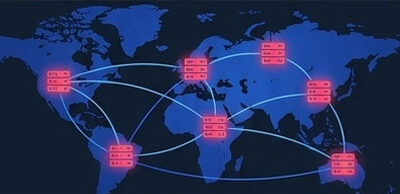
AirTM is a fintech platform its makers call the world’s most connected digital-dollar account. In plain terms it’s a wallet for holding, buying, and selling digital dollars (USDC) — the regulated stablecoin issued by Circle, backed 1:1 by USD — with a peer-to-peer marketplace bolted on to convert those dollars to and from local currency.
The company is US-based and registered as a Money Services Business (MSB) with FinCEN. Its core audience has always been freelancers, creators, and remote workers in emerging markets — heavily Latin America (Argentina, Venezuela, Colombia, Ecuador) — where getting and keeping dollars through a local bank is genuinely hard.
The mechanic that defines it: any money you receive can be held as USDC, and when you need local cash, you sell those dollars to another user through the marketplace. That P2P layer is the whole point, and it’s where both the value and the hidden cost live — covered below.
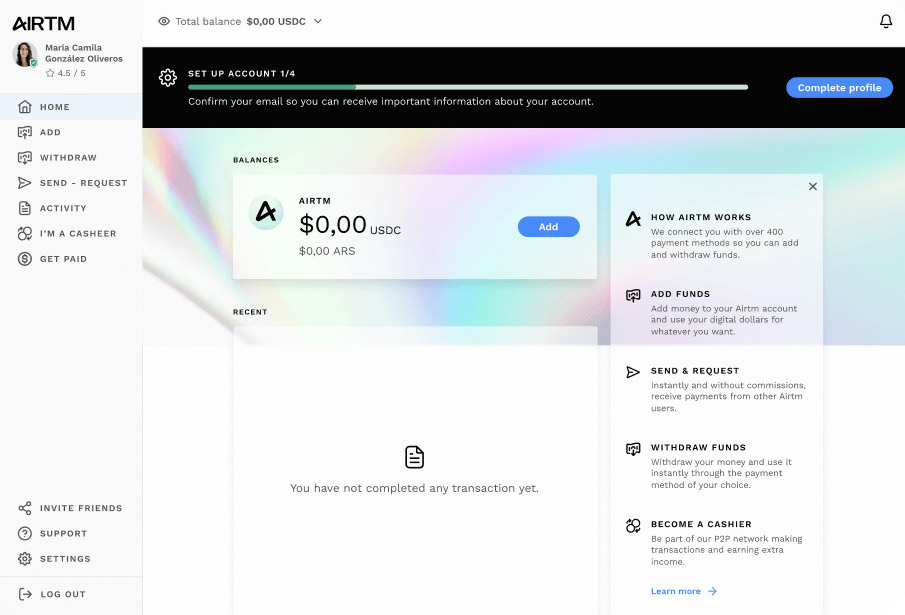
AirTM is a fintech platform its makers call the world’s most connected digital-dollar account
Why it matters for affiliates and media buyers
Reframed from “freelancer getting a salary” into performance-marketing terms:
Receive payouts in dollars, from the sources you actually use. AirTM now gives you a US virtual account with ACH details — you can receive USD as if you had a US bank account. It also pulls funds in from PayPal, Upwork, Deel, and connects with Payoneer, plus direct crypto (USDC/USDT/DAI) and 500+ local methods. For a media buyer collecting from networks or platforms, that’s a lot of inbound rails in one place.
Hold value in dollars, not a collapsing local currency. Payouts land as USDC and stay dollar-stable while you decide what to do with them — the core reason AirTM exists in high-inflation markets.
Cash out to local money without a bank fighting you. The P2P marketplace lets you sell USDC for local currency, with AirTM sitting in the middle as escrow. In countries with a big gap between official and real exchange rates, this is often the only practical route.
Pull it out as crypto. Unlike Wise or Payoneer, AirTM lets you withdraw straight to USDC on-chain (Stellar, Solana and others) — useful if your next move is an exchange or a crypto-native supplier.
The honest fit: AirTM is a receive-and-cash-out hub for specific regions and situations — not a general-purpose account, and not somewhere to park funds.
How the P2P marketplace works (and where the real cost hides)
This is the heart of AirTM, so understand it before you fund anything.
The marketplace is where two users meet to trade — one buying USDC with local currency, one selling — and AirTM acts as the trusted middleman (escrow), freezing the funds until both sides confirm. The users who provide liquidity are called cashiers; they buy and sell dollars to others and earn on the spread, much like P2P on Binance or Bybit.
The price you get is built from three parts: a base exchange rate, the cashier’s commission, and AirTM’s platform fee. Critically, pricing is dynamic 24/7 — AirTM’s algorithm constantly adjusts the rate and cashier commissions toward a supply-demand equilibrium, so in markets with a big official-vs-real rate gap, the effective rate moves in real time.
The practical takeaway: AirTM looks “free” on small internal transfers, but the real cost is buried in the P2P spread, not in a headline fee. Always check the final amount before confirming — that’s where the money actually goes.
Receiving payouts: the setup
US virtual account (ACH). After KYC you get US-style account details to receive USD like a domestic transfer — the cleanest option for US-based networks and platforms, landing as USDC.
Crypto. Networks or partners that pay in stablecoins send straight to your wallet — USDC and others, on-chain.
P2P and local methods. Buy USDC from a cashier with local currency, or use one of 500+ local funding methods (bank, mobile wallets, cards).
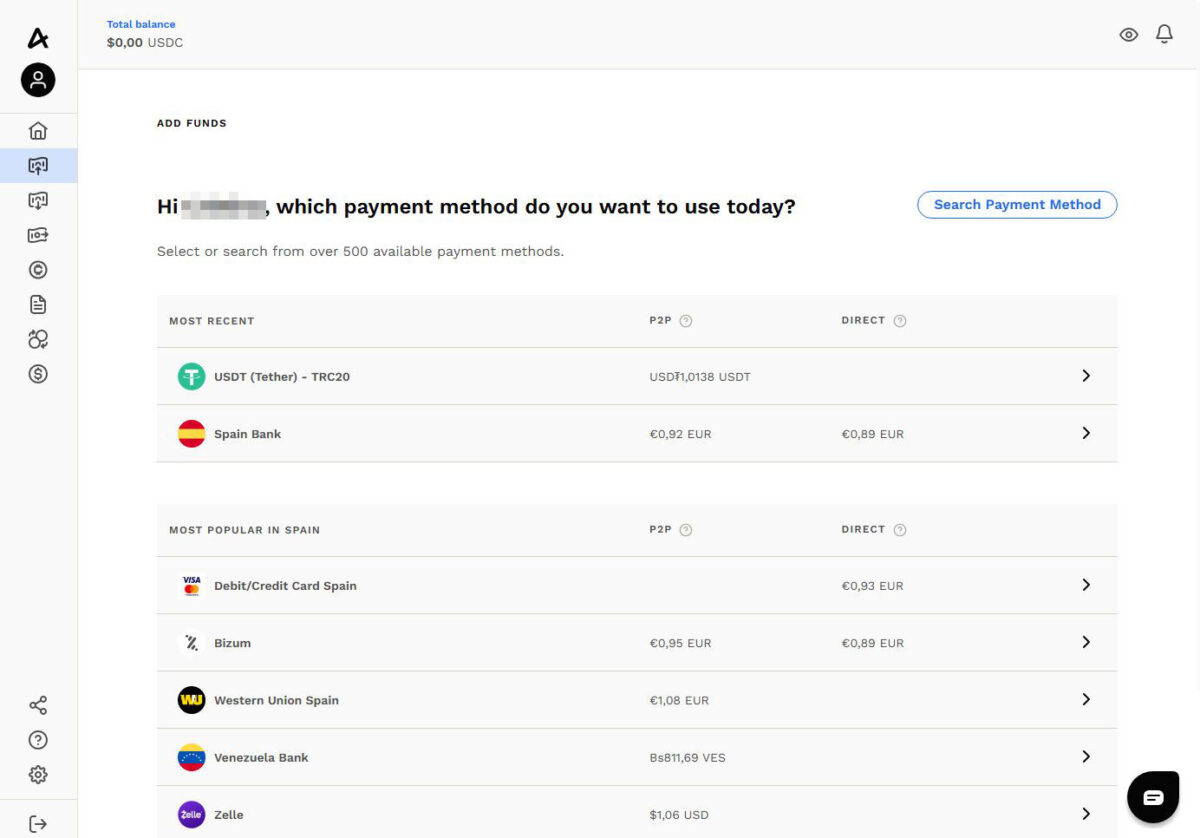
AirTM’s virtual USD account — receive international payments as digital dollars
The card, the FX, and the real costs
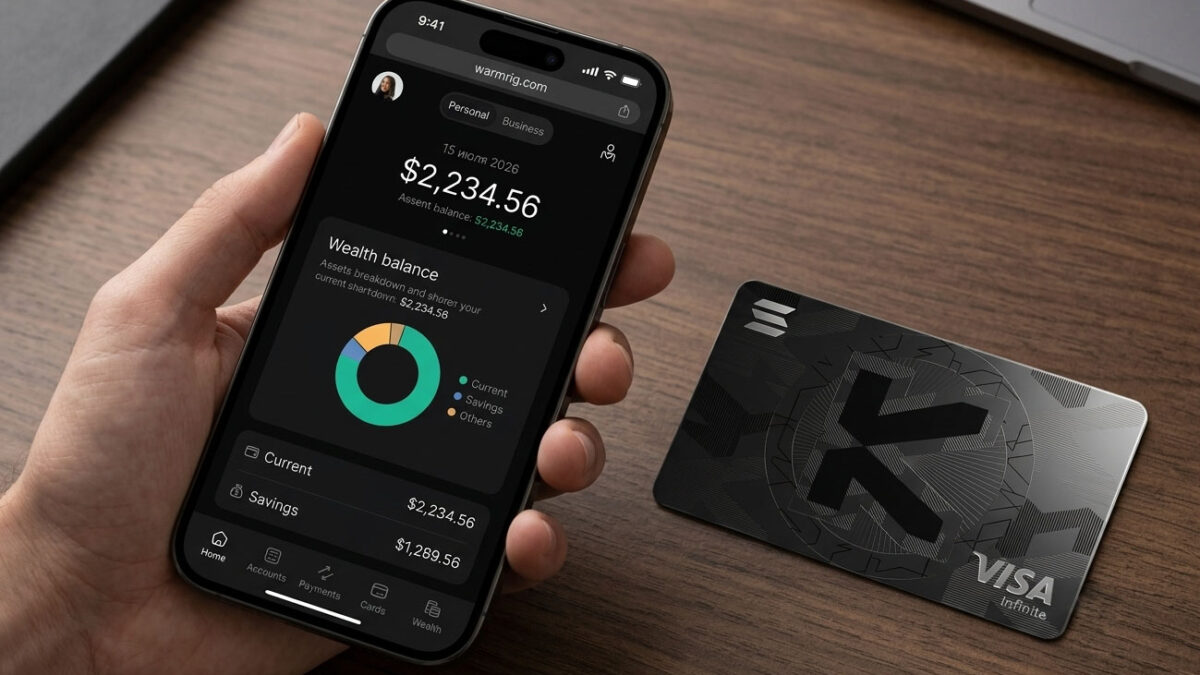
AirTM issues a virtual prepaid Visa that spends from your USDC balance, converting to local fiat at the point of sale. Recent detail worth noting: the card is issued by Lead Bank pursuant to Visa licensing, via the Bridge card program (Bridge is a Stripe company) — so it’s a bank-issued prepaid card, though AirTM itself is not a bank.
The numbers (verify current on AirTM’s site — fee schedules change):
- Issuance: free
- FX fee: 1% on the first $200 loaded per month
- Daily spend limit: ~$2,000/day
- ATM: not available — it’s a virtual card, online/contactless only
- Apple Pay / Google Pay: supported
- Watch for: a $1/month inactivity fee, and the card has historically been region-locked — including unavailable in several US states (CT, HI, NY, NH, TX, VT, VA). Confirm availability in your region before funding, because this is a recurring complaint (below).
For spending, AirTM’s card is fine for USDC holders who want to spend without managing wallets — but there’s no meaningful cashback, and the region-lock is a real trap if you don’t check first.
Fees at a glance
| Action | Cost |
|---|---|
| Internal transfers (send) | Free up to $400 or 3 transfers/month, then +1% |
| P2P (buy/sell USDC) | Dynamic: base rate + cashier commission + platform fee (in the spread) |
| Crypto send | Network-dependent; limit ~$2,500 USDC per transaction |
| Card issuance | Free |
| Card FX | 1% on first $200 loaded/month |
| Inactivity | ~$1/month |
| Business — bank funding / crypto funding | Free (AirTM side) |
| Business — bank withdrawal | $50 + 1% |
| Business — crypto withdrawal | 0.5% |
As a real-world reference point, one documented example of funding an AirTM account from a US bank came to roughly 1.13% all-in. The pattern: cheap on small internal moves and crypto, with the meaningful cost sitting in the P2P spread and the per-attempt limits below.
Newer features: Yield and Business
Two things worth knowing that weren’t part of AirTM’s older pitch:
Airtm Yield. AirTM now offers a DeFi-style yield feature — earn interest on idle USDC sitting in your account, positioned like a savings account without the paperwork or minimums. Same honest caveat as any such feature: this is variable DeFi yield on a custodial platform, not an insured deposit — fine for short parking, not for warehousing reserves.
Airtm Business. Beyond the individual account, AirTM offers a business tier for paying teams or collaborators globally in dollars, with its own funding/withdrawal fee schedule (bank withdrawal $50 + 1%, crypto withdrawal 0.5%). Relevant if you pay a distributed team of buyers or creators in emerging markets.
Limits
| Operation | Limit |
|---|---|
| Fund / withdraw (per attempt) | ~$1 – $2,000 |
| Crypto send (per transaction) | up to ~$2,500 USDC |
| Free internal transfers | $400 or 3 transfers/month |
| Card spend | ~$2,000/day |
The per-attempt cap means larger sums must be moved in chunks — plan for that if you’re cashing out a big payout. Verified or premium accounts may have higher limits.
KYC, AML, and keeping your account alive
This section matters more for you than for a casual user, because AirTM’s freeze pattern is the whole risk.
Verification is standard — passport/ID plus a selfie — and usually clears in minutes, though reviews report it sometimes drags on for days. Accounts with documents from sanctioned countries (e.g. Russia) won’t activate.
Here’s the part to plan around, straight from the recurring complaint pattern: users report a sequence where the first few transactions go through fine, then — often right after completing full document verification — the account gets restricted with little explanation. For someone receiving irregular payouts from multiple sources, that risk is real and asymmetric: a hold on your payout account at the wrong moment is painful.
Protect yourself:
- Treat it as transit — receive, cash out, don’t leave a balance sitting.
- Keep every transaction record — screenshots, references, cashier details — in case of a review or dispute.
- Only respond to official AirTM channels for any document request; ignore anything asking for documents out of band (phishing).
- Keep an alternative ready (KAST, Wise, or Payoneer) so a freeze doesn’t cut off your only cash-out route.
The risks, stated plainly
AirTM has genuine reputation problems. Being honest about them is the point.
Trustpilot around 3.1/5. Across thousands of reviews, the average sits at a mediocre ~3.1/5. Positive reviews cluster among Latin American freelancers who value the interface and the breadth of local methods; the negatives are serious and repeat.
Account freezes without clear explanation. The most common complaint — accounts restricted after verification or a few successful transactions, slow or templated support, and difficulty getting frozen funds released, sometimes for weeks.
P2P gift-card scams. There are documented cases of coordinated fraud inside the marketplace — for example, exchanges settled via Amazon gift cards that were later revoked as unauthorized, wiping the balance, with multiple cashier accounts acting together. Lesson: avoid gift-card P2P exchanges entirely; prefer direct methods (bank, crypto) and cashiers with long, high-volume histories.
Hidden region-locks on the card. Complaints that promoted card bonuses gloss over the fact that the virtual Visa is region-locked, leaving users who funded expecting a working card to jump through P2P/PayPal hoops — at extra cost — to get their money back.
Custodial, uninsured. You don’t hold the keys; AirTM can freeze your account, and USDC here isn’t FDIC/FSCS-covered. If the platform has a problem, you’re dependent on it.
Mitigation is the same discipline throughout: don’t store funds here, avoid gift-card P2P, vet cashiers, keep records, use 2FA, and always have a backup account.
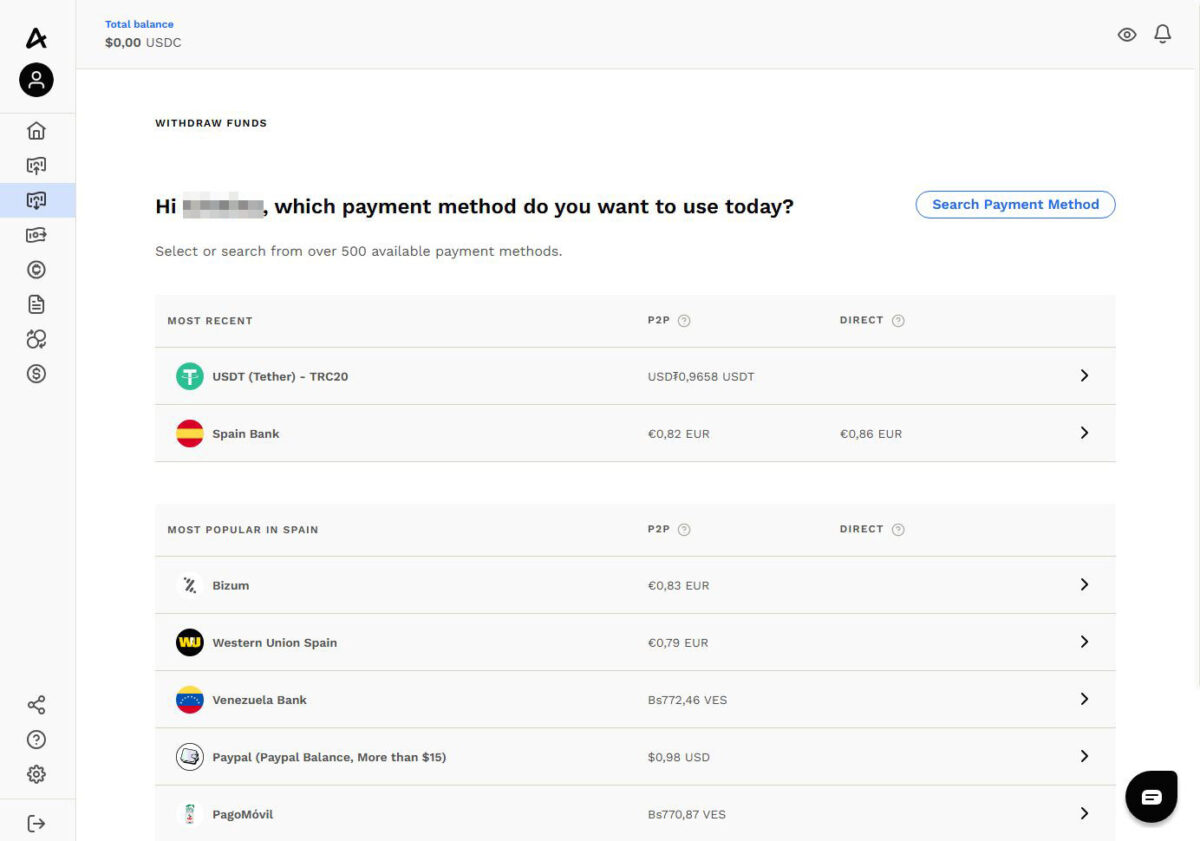
AirTM Withdrawing
Can you fund ad accounts with it?
No — and less suitable than most. AirTM’s card is a single region-locked virtual prepaid card, not a virtual-card (VCC) service, and it can’t clear in whole US states, let alone give you the many card numbers running paid traffic requires. On top of that, AirTM’s freeze risk makes it a poor place to hold operational funds you need on demand.
Keep AirTM for the money side in the regions where it makes sense — receiving and cashing out — and use a dedicated VCC provider for ad-account funding. Different jobs.
AirTM vs. KAST vs. Wise vs. Payoneer
For a media buyer, the real comparison is the payout tools you weigh against each other.
AirTM vs. KAST. Both are USDC digital-dollar accounts with cards and crypto rails, and both now offer yield. KAST is the newer, cleaner product with stronger backing and better reviews; AirTM’s edge is its deep P2P local-currency network in emerging markets and 500+ local methods, which KAST doesn’t match. If you need to convert to a Latin American currency at the real rate, AirTM wins there; for most other digital-dollar needs, KAST is the better pick. See our KAST review.
AirTM vs. Wise. Not really the same tool. Wise is a regulated multi-currency account with cheap, transparent FX and strong reputation, but no crypto rails and no P2P-to-local-currency in restricted markets. Where you can bank normally, Wise wins on cost and trust; where you can’t, AirTM exists to fill that gap. See our Wise Business review.
AirTM vs. Payoneer. Payoneer is the more widely accepted native payout option inside networks, with a better reputation and fewer freeze complaints — and AirTM actually integrates with it for cash-out. For most affiliates, Payoneer is the safer default; AirTM is the specialist for local-currency conversion and crypto-out.
The realistic setup: AirTM only where its P2P/local-currency network is genuinely needed, KAST or Wise as your main digital-dollar/fiat account, Payoneer for networks that pay to it natively, a proper VCC for ad funding, and cold storage for reserves.
FAQ
What is AirTM in simple terms? A US-registered fintech and digital-dollar wallet for holding, buying, and selling USDC, with a peer-to-peer marketplace where users swap dollars for local currency and AirTM acts as escrow. It works in 190+ countries and is most popular with freelancers and remote workers in emerging markets.
Is AirTM safe in 2026? It’s legally registered (MSB with FinCEN), uses 2FA, KYC, and P2P escrow — but its reputation is mixed, with a Trustpilot around 3.1/5 and many complaints about account freezes and P2P scams. It’s custodial and uninsured, so treat it as a transit tool and don’t store large balances.
What are AirTM’s fees? Internal transfers are free up to $400 or 3 per month, then 1%. P2P cost is dynamic and hidden in the spread. Card issuance is free with a 1% FX fee on the first $200/month, plus a ~$1/month inactivity fee. Business bank withdrawals are $50 + 1%, crypto withdrawals 0.5%. Always check the final amount before confirming a P2P trade.
Can I use AirTM to receive affiliate payouts? Yes — it offers a US virtual account (ACH), pulls in from PayPal, Upwork, Deel and Payoneer, accepts crypto, and supports 500+ local methods. It’s especially useful for receiving USD in emerging markets and cashing out to local currency.
Can I fund Facebook or TikTok ads with the AirTM card? No, not reliably. It’s a single region-locked virtual prepaid card, not a multi-card VCC service, and freeze risk makes it a bad place for operational funds. Use a dedicated virtual-card provider for ad funding.
AirTM or Payoneer for affiliates? Payoneer is more widely accepted, better-reputed, and has fewer freeze complaints — the safer default. AirTM’s advantage is P2P conversion to local currency in restricted markets and crypto withdrawal. AirTM even integrates with Payoneer for cash-out.
Why does AirTM freeze accounts? Freezes are the top complaint and reasons are often not explained. Likely triggers: AML flags, suspicious P2P activity, KYC mismatches, or fraud from counterparties. Support is often slow. Reduce the risk by verifying honestly, avoiding sketchy P2P trades, and not holding large balances.
Bottom line
AirTM solves a specific, real problem: getting, holding, and cashing out dollars in places where local banking makes that hard — which is exactly why it’s big in Latin America. For a media buyer or affiliate operating in or from those markets, or being paid through AirTM specifically, it earns a spot as a receive-and-cash-out tool, and the newer US virtual account, Yield, and Business features widen what it can do.
But respect what it is: a custodial platform with a mixed reputation and a documented freeze pattern. Use it as transit, not storage; avoid gift-card P2P and vet your cashiers; check card availability before funding; keep records and a backup account. Where you can bank normally or want a cleaner digital-dollar experience, KAST or Wise is usually the better call — AirTM is the specialist you reach for when its P2P and local-currency network is the thing you actually need.
Product Review
Thank you
Your Review is appreciated













[…] из-за рубежа, но получить и сохранить доллары сложно. AirTM решает это: вы получаете оплату в USDC (стабильный […]